Work
Leave a better handoff.
Pass on the materials, the constraint, and a next step the receiving craftsperson can check.

Illustrative images
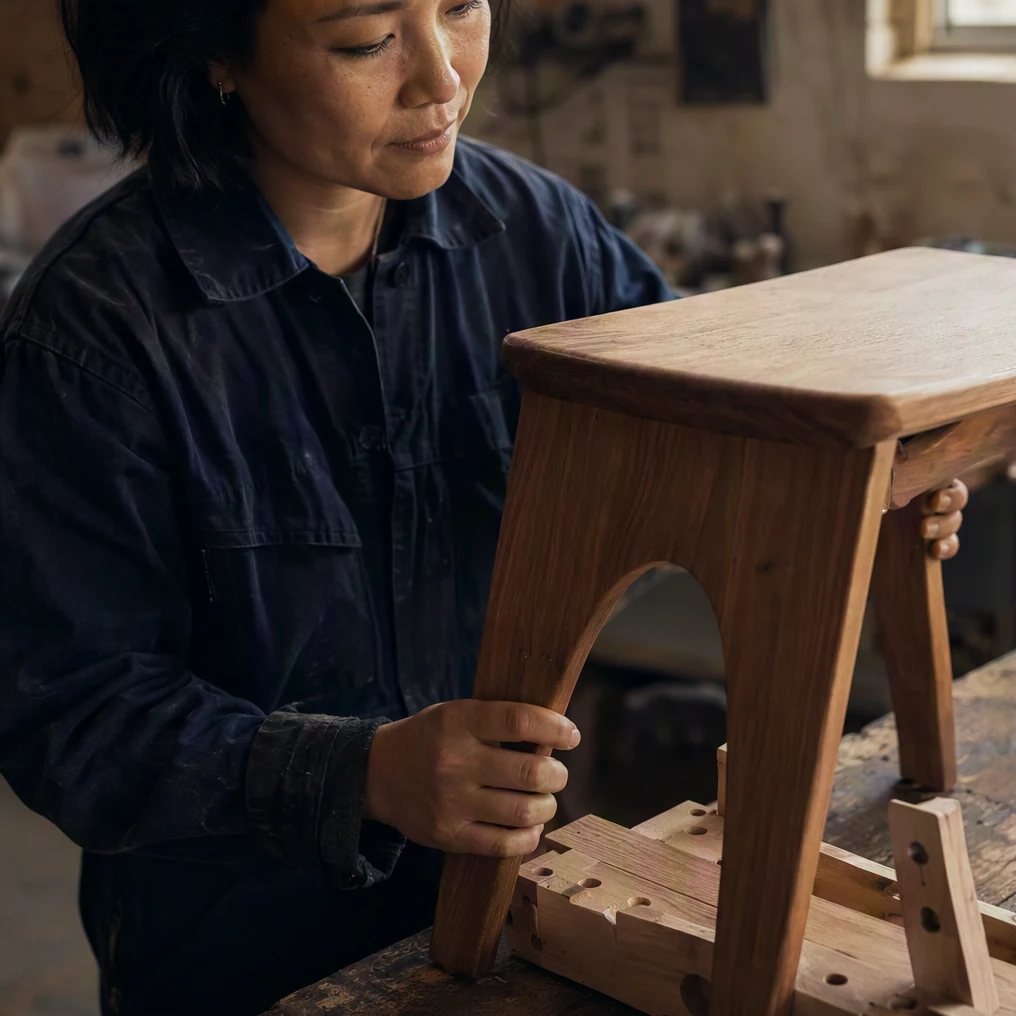
Check what you are passing on.
Check the stool and the assembly jig before transferring the job. Separate what is complete from what still needs checking. Identify any detail that affects safe continuation, and do not present an unfinished check as an approved result.

Share the reason, too.
Show the joinery choice and the relevant jig setting. Explain why it matters to the next stool, then let the receiver ask and inspect. A folder is useful only if its contents resolve the question the next person faces.
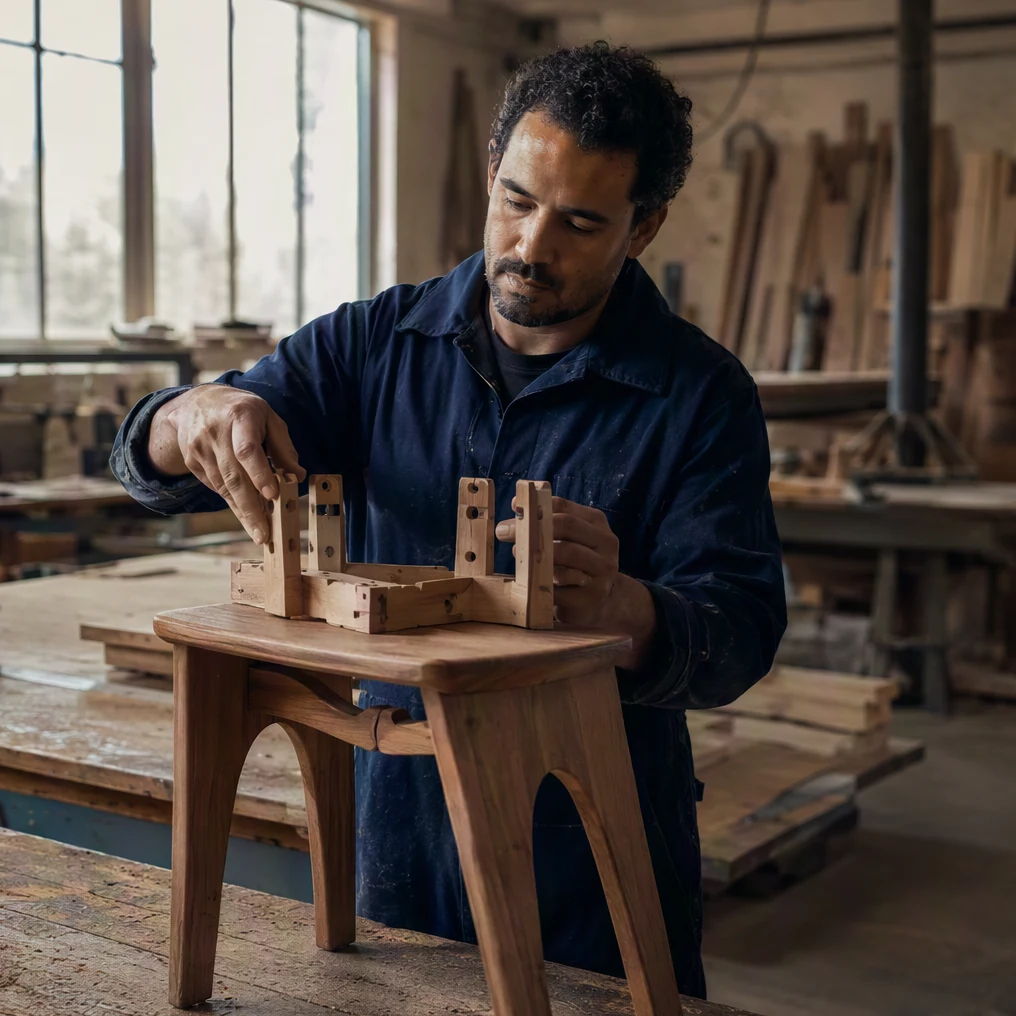
Let the next person carry it.
Let the receiving craftsperson confirm the materials and next operation. Name who owns the remaining check and how to ask for clarification. Continue using the appropriate shop procedures; a visual story is not instruction for operating tools.
Before accepting a handoff, check the next operation, the unresolved constraint, and the owner.